
No country has achieved a faster, deeper modern transformation than China, says former ambassador Kishan S Rana.

The Reserve Bank of India (RBI) has identified "climate shocks" as a risk to food inflation rates and overall price rise while stating that the outlook for the country's economic growth remains bright. In its Annual Report for 2023-24, released on Thursday, the central bank said easing supply-chain pressures, broad-based softening in core inflation, and early indications of an above-normal southwest monsoon meant well for the inflation outlook in 2024-25. "The increasing incidence of climate shocks, however, imparts considerable uncertainty to the food inflation and overall inflation outlook," said the RBI while noting headline inflation moderated by 1.3 percentage points on an annual average basis to 5.4 per cent in 2023-24.

The Reserve Bank's growth projection for next financial year is lower than 8-8.5 per cent projected by the finance ministry in the recent Economic Survey which was tabled in Parliament on January 31. Unveiling the bi-monthly policy, RBI governor Shaktikanta Das said, "Recovery in domestic economic activity is yet to be broad-based, as private consumption and contact-intensive services remain below pre-pandemic levels."

The world economy is projected to grow at an average rate of just over 3% per annum from 2011 to 2050, doubling in size by 2032.

In India, economic activity slowed substantially in 2019, with the deceleration most pronounced in the manufacturing and agriculture sectors, whereas government-related services sub-sectors received significant support from public spending, the Bank said.

India's services sector growth recorded another month of robust expansion in July, albeit at a slightly slower pace than in June, largely supported by robust demand conditions and investment in technology, a monthly survey said on Monday. The seasonally adjusted HSBC India Services Business Activity Index was at 60.3 in July, down only fractionally from 60.5 in June. In the Purchasing Managers' Index (PMI) parlance, a print above 50 means expansion, while a score below 50 denotes contraction.

She has shown shrewdness, sensitivity, and courage. All of these will be needed in ample quantities for the real challenge that will emerge after the elections, notes Shreekant Sambrani.

Pragmatism and flexibility is a virtue. An untethered and short-term approach to policymaking is a flaw, argues Mihir S Sharma.

India needs to sustain a GDP growth rate of 8 per cent to become a five trillion dollar economy by 2025, the Economic Survey has stated.

The bias for the BSE benchmark index, technical charts suggest, is likely to remain bullish as long as the index holds above 75,600 levels for the rest of the year.
Govt to strongly pitch for better rating, to argue India has successfully weathered its problems and govt capacity on growth remains high.

Digital literacy is emerging as the professional language of 2024. It is the ability to process complex data sets, deploy critical communication technologies appropriately and validate your importance at your workplace, explains Jagdeep Kochar, managing director, Baker & Taylor India.

World Bank says India has bright prospects.

As per the findings, CEOs are less optimistic about prospects this year.

If Chinese growth starts falling, sharply or otherwise, the risk on trade might reverse.

'Many do not have robust business models, and their prospects of survival and long-term growth are poor.'

Echoing Prime Minister Narendra Modi's views that improving the health of financial markets alone cannot fuel growth, G20 business leaders on Friday said vigorous efforts should be made to go beyond fiscal and monetary policy to kickstart world economy and create jobs.

The just-concluded plenary session of the ruling Communist Party of China (CPC), headed by Xi, adopted his proposals for the formulation of the 14th Five-Year Plan (2021-2025) for National Economic and Social Development and the Long-Range Objectives Through the Year 2035.

Do not, however, enter expecting quick returns.

Among the 30 Sensex companies, Larsen & Toubro, Power Grid, NTPC, State Bank of India, Reliance Industries and HDFC Bank were the biggest laggards. Sun Pharma and Nestle were the only gainers.
The Indian stock market does not present attractive prospects for investors in the near term amid sluggish domestic and global economic growth outlook, according to Goldman Sachs.
Finance Minister Pranab Mukherjee today said the global slowdown will impact India's growth prospects, but expressed hope that inflation will start moderating from December.

Macroeconomic data announcements, global factors and trading activity of foreign investors would be the key triggers for the domestic stock markets this week, analysts said. Last week, the benchmark indices joined the broader market's party despite a host of negative global cues. In the broader market, the BSE midcap and smallcap gauges hit their all-time highs on Friday.

India will drive growth in the Asia-Pacific (Apac) region as the growth engine is likely to shift from China to South and Southeast Asia in the coming years, S&P Global Ratings said in a report on Tuesday. The rating agency's report projected China's growth to slow down to 4.6 per cent by 2026 from an estimated 5.4 per cent in 2023. India is likely to clock 7 per cent economic growth from 6.4 per cent estimated for 2023.
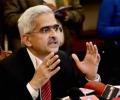
Reserve Bank Governor Shaktikanta Das has pitched for policy support from all sides -- fiscal, monetary and sectoral -- to nurture recovery of the economy hit by the second wave of the coronavirus pandemic. The dent on economic activity due to the second wave of the pandemic during April-May necessitated continuation of monetary measures to support the process of economic recovery to make it durable, Das had said while participating in the meeting of the Monetary Policy Committee (MPC) earlier in the month. "Overall, the second wave of COVID-19 has altered the near-term outlook, and policy support from all sides - fiscal, monetary and sectoral - is required to nurture recovery and expedite return to normalcy," Das said, as per the minutes of the meeting released on Friday.
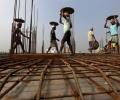
With this India will continue to retain the position of being the fastest growing emerging economy. And by 2021, its growth rate is projected to be 1.5 per cent more than China's 6 per cent.

Export sectors that showed positive growth last month included chemical, iron ore, electronics, marine products and pharmaceuticals. Decline in overall imports, including oil and gold, led to narrowing of trade deficit.

Global economic situation continues to be challenging & global growth will likely remain tepid in 2012

Have the markets already played out their dynamics before the economy has even properly taken off? Are we now destined for a period of mediocre returns despite a strong economy? asks Akash Prakash.
HSBC's downward revision is in line with similar kind of revisions by a host of other think-tanks, research houses, investment banks and other agencies like the UN, Morgan Stanley, Goldman Sachs, Merrill Lynch, Stanchart and Citi.

China's GDP growth slowed in the second quarter this year to 7.5 per cent, official data showed on Monday, as the Chinese leadership faced fresh challenges to stimulate and revamp the world's second-biggest economy.

The 54-page document tabled in Parliament detailed how the Modi-government pull the economy from being counted among the most fragile-five in the world to being the fasted growing and the most attractive investment destination.

'...you evaluate three key factors before committing your money.'

India's growth projection released by the latest World Economic Outlook remains unchanged from its previous WEO (World Economic Outlook) update of July this summer but is a three-percentage point in 2021 and 1.6 percentage point drop from its April projections. According to the latest WEO update, released ahead of the annual meeting of the IMF and the World Bank, the world is expected to grow at 5.9 per cent in 2021 and 4.9 per cent in 2022.

'Opportunity for a country like India is huge in terms of wealth creation.' 'That's the reason India is an attractive economy for investors.'

Delaying action on climate change will hurt growth: Global CEOs.
Two years of economic slowdown has pushed the number of people without jobs worldwide to a record 180 million, with little prospect of any improvement in the global employment situation this year: ILO

India's population is projected to peak in the early 2060s at about 1.7 billion and then decline by 12 per cent, but the country will remain the world's most populous throughout the century, the United Nations has said.
The gradual world economic recovery underway is held hostage to a number of imminent risks with global economy likely to grow at a little over two per cent and world trade by six per cent, the United Nations said in a report Thursday.
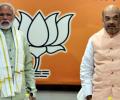
Corporate leaders said a stable government at the Centre will help boost infrastructure spend, address agricultural distress, and encouraging employment.
